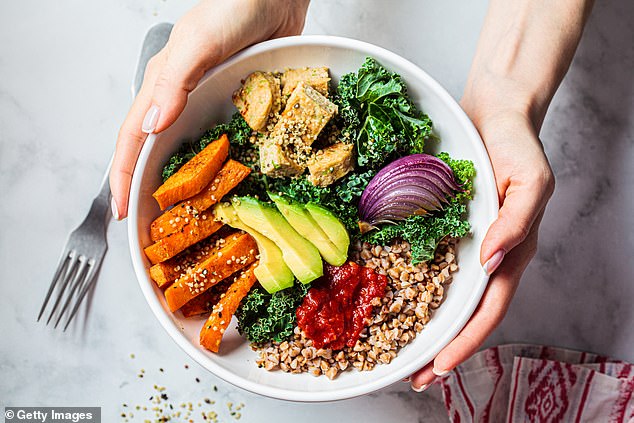
Ditching meat and dairy for just one month may add years to your life, a study shows.
People who went vegan for four weeks saw shocking DNA changes linked to lower inflammation and slower aging compared with those eating meat-rich diets.
Researchers wanted to see whether changing what people eat can quickly impact how their bodies work at the cellular level, finding herbivores had biological markers linked to a less inflamed immune system.
The vegan diet also appeared to reduce activity in genes involved in cancer-related pathways and may help slow biological aging.
The findings show how quickly diet can affect the body’s cells and its potential effect on long-term health.
In the study, published in the journal MedComm, researchers randomly assigned 48 adults to a vegan or meat-rich diet for one month. Both diets had similar calorie counts, so weight loss wouldn’t influence the results.
Researchers took blood samples before and after the month-long period, then examined the DNA for signs of change.
To look for DNA changes, researchers checked more than 800,000 spots across the genome where methylation – the process that can switch genes on or off – occurs.
The results showed the vegan diet was linked to fewer inflammation-driving cells and more cells that help keep the immune system in check.

Researchers found that people who went vegan for four weeks saw DNA changes linked to lower inflammation and slower aging compared with those eating meat-rich diets
Going meatless also appeared to suppress genes linked to cancer pathways while boosting genetic activity tied to lower cholesterol, better insulin response and stronger DNA repair.
Scientists have developed ‘biological age clocks’ that use DNA to reveal how quickly the body is aging beneath the surface and in the one-month study, the vegan diet appeared to slow that clock.
When someone’s biological age is ahead of their actual age, it can signal a higher risk of disease later in life.
‘These findings reinforce the idea that not all measures of biological aging capture the same biology,’ researcher Jerome Mertens said.
‘The clocks associated with disease risk and overall health consistently pointed in the same direction, suggesting the dietary changes were influencing pathways tied to health rather than simply the passage of time.’
However, the study was small and the genetic changes were modest, so larger, longer-term studies are needed to see whether going vegan can truly cut disease risk.
The study also wasn’t limited to clean, whole foods – participants could eat vegan processed snacks, including granola bars, to meet their calorie goals. A similar study with a different diet could produce different results.
Even so, the findings offer an early glimpse at how quickly plant-based eating may reshape the body’s cells in just four weeks.
‘Our study adds to growing evidence that nutrition can shape biology at the molecular level,’ co-senior author Dr Max Storz said.
‘The next step is to understand whether these epigenetic changes persist over time and whether they translate into meaningful improvements in long-term health,’ Storz said, adding that will require larger clinical studies.
Roughly four percent of the US population follows a vegan diet, according to a poll by Statista.
Experts have said that the eating plan has a number of health benefits, and separate studies have shown that vegans are less likely to suffer from heart disease, diabetes and cancer than meat eaters.
However, some say that veganism can also trigger a number of harmful vitamin deficiencies.
Chief amongst these is a lack of vitamin B12 – a nutrient crucial for healthy blood vessels and brain function that is not found in plant-based foods like fruits, vegetables and grains.
Instead, vitamin B12 is primarily found in meat, fish, milk and eggs. Health officials advise that vegans take a daily vitamin B12 supplement.