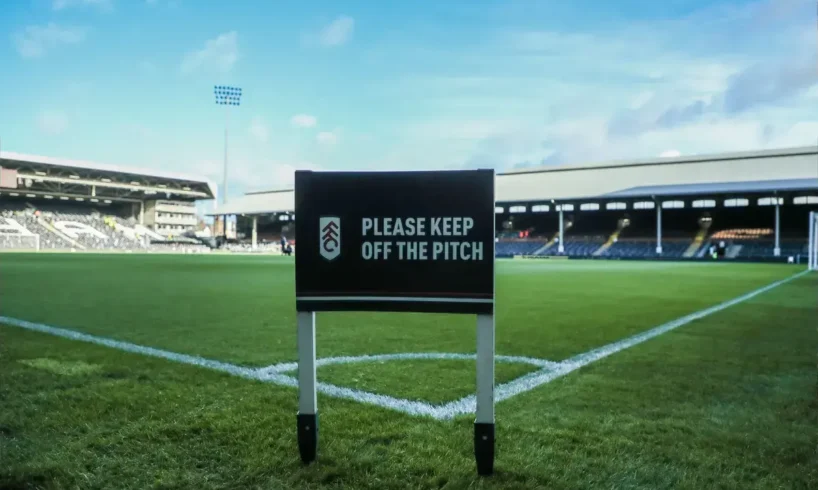
Fulham’s Premier League history is a story of transformation, European adventure, repeated promotion and a successful return to stability.
The Cottagers were playing in the fourth tier when the Premier League began in 1992. Their fortunes changed following Mohamed Al-Fayed’s takeover in 1997, which brought greater investment and ambitious plans to take the club into the top flight.
Fulham reached the Premier League in 2001 after winning the First Division with 101 points. A 13-year stay followed, featuring memorable players, dramatic survival campaigns and an extraordinary run to the 2010 Europa League final.
Relegation in 2014 began a period in which Fulham moved repeatedly between the Premier League and Championship. Under Marco Silva, the club eventually broke that cycle and established itself as a competitive top-flight side once again.
From the lower divisions to European nights at Craven Cottage, this is the complete Fulham Premier League timeline.
1992: Fulham Begin the Premier League Era in the Third Tier
Fulham were a long way from the Premier League when the competition was launched.
The club began the 1992/93 season in the third tier, which had been renamed Division Two following the formation of the Premier League.
Fulham had spent much of their history outside the leading levels of English football. Financial problems and declining performances had pushed the club down the pyramid during the 1980s.
The Cottagers finished 12th in 1992/93 before dropping further during the following campaign.
At that stage, Premier League football appeared to be a distant ambition rather than a realistic short-term objective.
1993/94: Fulham Fall into the Fourth Tier
Fulham endured a difficult 1993/94 campaign and finished 21st in Division Two.
Relegation sent the club into the fourth tier of English football for the first time in its history.
The decline placed further pressure on Fulham’s finances and infrastructure. Craven Cottage remained one of the country’s most distinctive grounds, but the team was struggling to compete against clubs with far fewer historical advantages.
Ian Branfoot remained manager and…
..