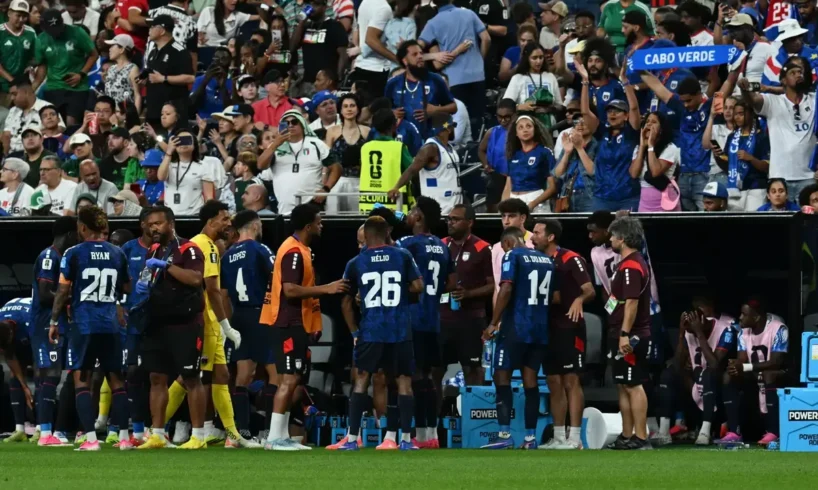
A player welfare measure that has split opinion
Hydration breaks have become one of the biggest talking points of the 2026 FIFA World Cup. Introduced as a player welfare measure, the pauses were designed to help footballers cope with high summer temperatures across the United States, Canada and Mexico.
On paper, the idea is simple: give players time to rehydrate, cool down and avoid the risks of heat stress during matches played in extreme conditions. In practice, however, the rule has sparked debate among fans, pundits, coaches and broadcasters.
What was meant to be a safety measure has quickly become a wider argument about the rhythm of football, tactical fairness, commercial influence and whether the World Cup is becoming too close to American-style sports entertainment.
What are the hydration breaks?
At the 2026 World Cup, every match includes a three-minute hydration break in each half.
The first break comes around the 22nd minute. The second arrives around the 67th minute. The rule applies to every game, regardless of the temperature, venue, weather conditions or whether the stadium has a roof.
That is what makes this World Cup different. In previous tournaments, drinks or cooling breaks were usually introduced only when conditions reached a certain heat threshold or when the referee deemed them necessary. This time, the breaks are mandatory across the entire tournament.
Why FIFA introduced them
FIFA’s official position is that the breaks are about player safety.
The 2026 tournament is being played across North America in June and July, with matches taking place in cities where temperatures can climb well above comfortable playing conditions. The issue became especially prominent during the 2025 FIFA Club World Cup in the United States, where players and coaches raised concerns about extreme heat, intense humidity and uncomfortable match conditions.
Some players reported dizziness and exhaustion during games, while coaches complained that training and match preparation were being affected by dangerous heat. Against that backdrop, FIFA decided to create a standardised hydration policy for the World Cup.
The logic…
..