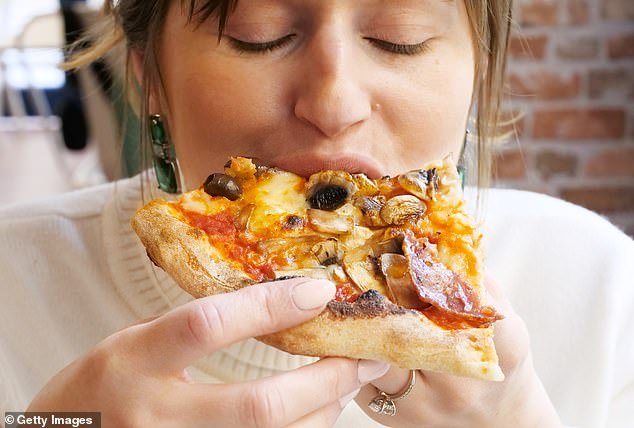

The nation’s longstanding love affair with pizza might finally be going stale.
The most recent profit figures from many of the major takeaway players – including Papa John’s, Domino’s and Pizza Hut – show a depressing slump in popularity, with more than 250 stores shutting up shop across the pond.
Even higher-end joints such as Franco Manca, which sells sourdough pies that are a firm middle-class favourite, are struggling. The chain closed a fifth of its restaurants earlier this year.
While several factors are behind the downturn, it largely comes down to a growing appetite for healthier food – and shrinking appetites caused by weight-loss jabs.
A single pizza can easily eat up a full day’s calorie budget, so it’s no surprise that health-conscious diners avoid it.
But with so many iterations of the Italian classic, are they all bad news for our waistline?
Here, experts analyse the nutrition of a simple margherita pizza from the UK’s most loved chains – and reveal the choices with surprisingly few calories, as well as the most virtuous toppings to add.

Pizza is falling out of favour for its calorific reputation – but is it that bad?
Pizza Express
Per two slices of margherita: 209 calories, 9.1g protein, 3.5g saturated fat, 1.1g fibre, 1.15g salt
A middle-ground between artisanal pizza restaurants and takeaway options, Pizza Express’s pizzas are made using pre-made dough and specially-made passata imported from Parma.
This margherita has far lower filling protein than many of the standard takeaways – like Pizza Hut and Papa John’s – so might be less satisfying.
However, compared to the artisanal-type versions from Franco Manca and such like, it’s protein-heavy, for relatively few calories, says nutritionist Rob Hobson.
It’s also low in saturated fat – containing less than half of the amount in Pizza Hut’s margherita.
The big downside is the extremely low fibre count – the lowest of all the pizzas analysed.
The nutrient, which is abundant in vegetables and wholegrains, is known to reduce bowel cancer risk as well as heart disease.
Verdict: 3/5
Franco Manca
Per two slices of margherita: 196 calories, 7.5g protein, 3.4g saturated fat, 1.82g fibre, 0.95g salt
Franco Manca’s Margherita pizza features the lowest calories of all the pizzas analysed and has nearly a gram more fibre here than Pizza Express’s version.
There’s also the lowest salt count, with less than a sixth of your daily limit in two slices.
And there’s a unique benefit, says Mr Hobson. ‘The sourdough base is made using a relatively simple combination of flour, water, sourdough culture, salt and yeast, without added sugar or oil.’ The fermentation process may help blunt blood sugar spikes, be more easily digested, and provide greater satiety, he adds.
The best option for those watching their waistline, Mr Hobson concludes.
Verdict: 4/5
Pizza Pilgrims
Per two slices of margherita: 231 calories, 7g protein, 3.36g saturated fat, 2.2g fibre, 1.45g salt
You get more calories and salt than a Franco Manca pie, virtually the same fat and only a smidge more fibre.

Franco Manca is set to shut 16 restaurants amid the struggling pizza industry
Plus, the lowest amount of protein means this is the pizza that’s the least likely to satisfy a hearty appetite.
However the simplicity of ingredients is a welcome benefit, says Mr Hobson.
‘This is minimally processed, made with just flour, water, yeast and salt, as well as tomatoes, fresh mozzarella, basil and olive oil, as opposed to additives and preservatives you get with some other chains.’
Verdict: 2/5
Pizza GoGo
Per two slices of cheese and tomato: 448 calories, 18.4g protein, 7.3g saturated fat, 3.6g fibre, 2.13g salt
This thick crust classic is predictably twice as calorific as some of the artisanal pizzas above, and more than twice as fatty.
But the extra dough adds fibre. There’s three times as much here as in two slices of Pizza Express’s offering, and nearly double the filling protein of pretty much all of the posh iterations.
Join the discussion
Which pizza restaurant or takeaway serves the best pizza?

Papa Johns introduced a new sourdough pizza range (pictured) earlier this year. The brand’s original cheese and tomato pie is twice as fatty as artisan-style pizzas
Compared to other thick crust options, it’s about average in terms of calories and fat, but the highest when it comes to salt, with a third of your daily limit in just two slices.
Verdict: 2/5
Papa John’s Original
Per two slices of cheese and tomato: 427 calories, 18.6g protein, 6.4g saturated fat, 4.2g fibre, 1.95g salt
Made from an oil and sugar-enriched dough, Papa John’s pizza contains nearly twice the saturated fat of artisanal-style pizzas, and just under half of a woman’s daily limit.
There’s also twice the calories of the same amount of Pizza Express margherita.
But there’s a stand-out benefit. The thick dough offers a fibre boost – about a large apple’s worth, and the second highest total of all the pizzas.
Verdict: 1/5
Papa John’s Thin Crust
Per two slices of cheese & tomato: 311 calories, 13.4g protein, 4.6g saturated fat, 3.3g fibre, 1.45g salt
If you like Papa John’s, a thin crust is the healthier choice, with considerably fewer calories, fat and salt as the doughier version.
In fact, it has nearly half the saturated fat of the other thin crust takeaway options.
The salt count is one of the best of all the pizzas, and there’s an impressive amount of protein as well as twice the fibre of Pizza Express’ thinner crust pie.
‘Various additives are used to improve the texture and stability of the base and cheese,’ adds Mr Hobson. ‘While these aren’t necessarily harmful, they make it a more heavily processed pizza.’
Verdict: 3.5/5
Domino’s Original Crust
Per two slices of cheese and tomato: 475 calories, 19.8g protein, 9.6g saturated fat, 11.6g fibre, 2g salt
Domino’s stands out for its highly impressive fibre count – more than a third of your daily needs in just two slices. That’s nearly three times the amount in most of the thicker crust pizzas.

What is UPF? The Nova system, developed by scientists in Brazil more than a decade ago, splits food into four groups based on the amount of processing it has gone through.
Mr Hobson says this is arguably worth the slightly higher saturated fat count here than Pizza Hut’s margherita.
The salt count is among the highest, however, accounting for a third of your daily limit in a couple of slices.
Verdict: 3.5/5
Domino’s Thin & Crispy Crust
Per two slices of cheese and tomato: 314 calories, 14.2g protein, 7.4g saturated fat, 1.8g fibre, 1.6g salt
‘Thin-crust pizza is not automatically the healthier option,’ says Mr Hobson, adding that, gram for gram, this pizza has more calories, fat and salt than the thicker crust.
‘However, thinner slices weigh less, meaning you’re consuming less without realising.’
Compared to other thin crusts, Domino’s performs relatively poorly. It has the highest saturated fat content of all the thin-crust pizzas analysed – and 61 per cent more than Papa John’s option.
Two slices also provide exceptionally little fibre, compared to almost all the other pizzas.
Verdict: 1/5
Pizza Hut Original Crust
Per two slices of margherita: 440 calories, 19.2g protein, 8g saturated fat, 3.2g fibre, 1.44g salt
When it comes to thick crusts, Pizza Hut’s margherita is the second least calorific and has less fat than Domino’s.
There’s also an impressive amount of protein, compared to some of the others, and a decent amount of fibre (roughly a banana’s worth).
Another plus point is the relatively low salt count – on par with many of the Neapolitan style pizzas and far lower than the other thick crust options.
Verdict: 3.5/5
Pizza Hut Thin and Crispy
Per two slices margherita: 303 calories, 15g protein, 7g saturated fat, 2.15g fibre, 1.1g salt
Among the thin-crust pizzas, Pizza Hut Thin & Crispy is probably the strongest all-round performer because it combines the lowest calories, highest protein and lowest salt.
In fact, this may be a better choice than some of the posher pizzas. Despite a small amount of extra fat, there’s far more filling protein and fibre, which is more likely to keep you full.
The fat content sits somewhere in the middle of the thin crust options, although considerably more than the surprisingly low 4.6g in two slices of Papa John’s cheese and tomato.
Verdict: 4/5
The toppings that are a disaster for dieters
Pepperoni and salami
‘These toppings are ultraprocessed meats, which tend to be high in salt and saturated fat,’ says dietitian Rob Hobson.
‘There’s also good evidence linking higher consumption of processed meat with an increased risk of bowel cancer. A few slices occasionally aren’t something to worry about, but I wouldn’t make them your regular pizza topping.’
Extra cheese and cheese-stuffed crusts
‘Cheese provides protein and calcium, so it’s not something you need to avoid but the problem is when you start doubling up on it,’ says Mr Hobson.
‘Extra mozzarella, four-cheese toppings and stuffed crusts can add quite a lot of saturated fat, calories and salt.’
BBQ sauce and sweet chilli sauce
‘These additions can add quite a bit of sugar and salt, especially when they’re used for more than a small drizzle,’ says Mr Hobson.
‘A traditional tomato base is usually a better everyday choice and also provides some lycopene, a carotenoid found in tomatoes.’
Garlic butter and creamy dipping sauces
‘These are easy to overlook because they’re not actually on the pizza, but they can add a surprising amount of calories and saturated fat to the meal.’
One pot of Pizza Express’s garlic butter adds an extra 200 calories to your meal, as well as 13g of saturated fat (more than half of a woman’s daily limit).
Mr Hobson advises opting for mushrooms, peppers, onions, spinach, tomatoes or artichokes as toppings.
‘It’s an easy way to add more vegetables, fibre and variety without dramatically increasing the calories,’ he says.