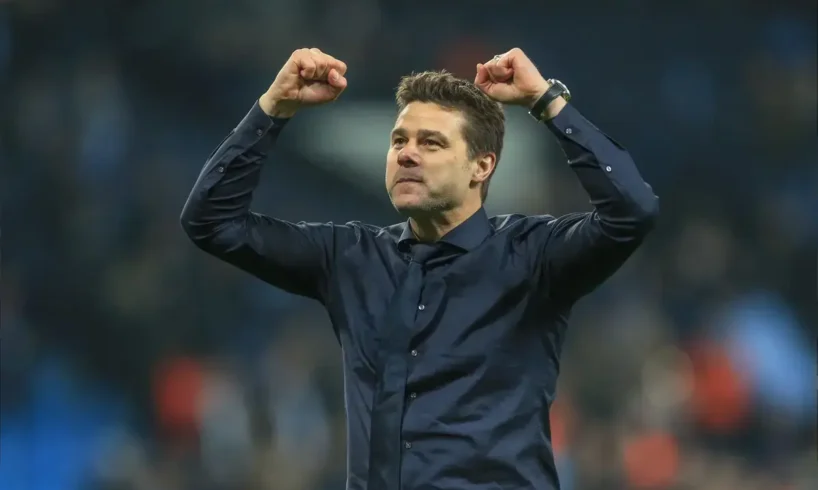
Mauricio Pochettino has been linked with the Manchester United job several times, but the timing may never have felt more appropriate.
Man United sit in the Premier League relegation zone after taking eight points from their opening 10 matches. They have won once, conceded 19 goals and failed to keep a clean sheet. A team that finished third last season now looks short of confidence, physical intensity and tactical clarity.
Pochettino would not provide a guaranteed solution, but his methods directly address several of Man United’s most obvious problems.
Greater intensity without the ball
Pochettino’s best teams are associated with aggressive pressing, high defensive lines and rapid reactions after losing possession.
His Tottenham side reached the 2019 Champions League final with a young, energetic team capable of pressing opponents across the pitch. Rather than retreating immediately after surrendering the ball, players were expected to close passing options and attempt to regain possession within seconds.
That would represent an important change for Man United.
Their pressing currently sits below the average across Europe’s leading leagues, while their Premier League matches have repeatedly become stretched. Opponents have been able to move through midfield and attack the defence without facing coordinated pressure.
Pochettino would demand more from the forwards. Bryan Mbeumo, Matheus Cunha and Benjamin Šeško would not only be judged on goals. Their positioning, pressing angles and reactions during defensive transitions would become central to the system.
A structure that suits Bruno Fernandes
Bruno Fernandes remains Man United’s most productive attacking player, contributing six goals and three assists across all competitions this season.
However, asking Fernandes to create chances, progress possession and repeatedly cover large defensive spaces limits his effectiveness.
Pochettino has traditionally used a 4-2-3-1, although his teams can move between a 4-3-3 and a back-three system. The 4-2-3-1 could give Fernandes a clearly defined role behind the striker, with two midfielders providing protection behind…..