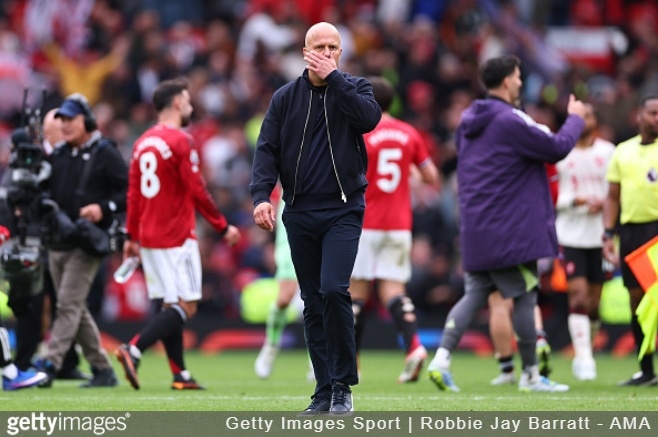
Liverpool’s defeat to Manchester United on May 3, 2026 was more than another damaging result in a season that has steadily unravelled. It was a moment of uncomfortable clarity. Not because of the scoreline alone, but because of what the match revealed — or rather, what it failed to reveal — about Liverpool’s identity under Arne Slot.
The Old Trafford Conundrum
Watching the game unfold, the difference between the two sides was notable.
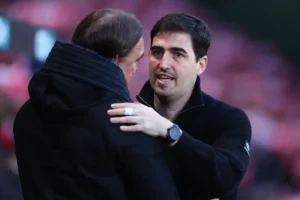
Under Michael Carrick, Manchester United were not flawless, but they were coherent. They knew how they wanted to play, how they wanted to press, where they wanted to exploit space, and how to manage moments without the ball. Liverpool, by contrast, looked like a collection of players waiting for a plan that never arrived.
This has long ceased to be a one‑off concern. It is now the defining critique of Slot’s Liverpool.
Embed from Getty Images
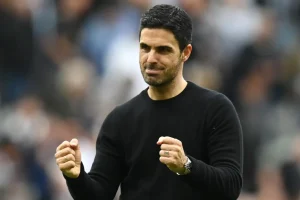
Slot arrived with a reputation for structure, positional discipline, and proactive football. What Liverpool have instead is a team that oscillates wildly between styles without committing to any. At times they press high without coordination. At others they retreat without compactness. Possession phases lack automatisms, while transition defence is reactive rather than organised. Players appear unsure whether to hold shape or take initiative — a classic symptom of tactical ambiguity.
United, for all their imperfections this season, looked like a team that understood its own limits and strengths. Liverpool looked like a side still searching for a framework, so late in the season, against well-organised opposition. That is unacceptable at this level.
Yes, Benjamin Sesko’s goal probably should’ve been ruled out for handball, as Slot pointed out after the match, but that’s no excuse. Liverpool did not deserve anything from the game.
Issues Persist Through the Season
The consequences are measurable. Eighteen defeats in all competitions, a tally that Liverpool have not approached in a very long time, speak to something systemic rather than incidental. Injuries can explain some of it. Squad turnover can explain more. But not all of it. Teams with fewer…
..