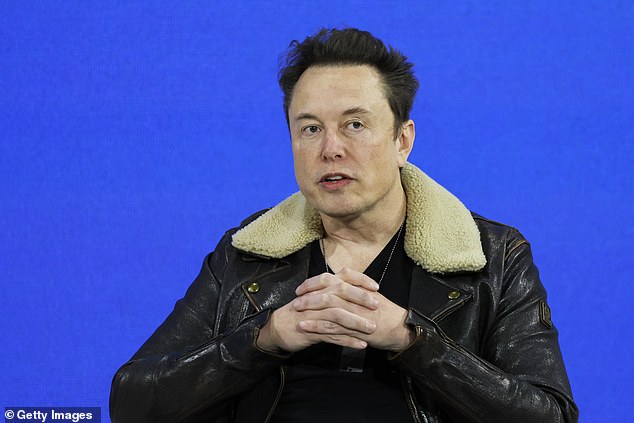

Elon Musk‘s Starlink fired two executives after Iran used the satellite internet services in attacks on US forces after the United States and Israel launched strikes against Iran.
Musk became enraged upon learning of two unauthorized uses of Starlink that his team concluded were related to Iran’s efforts against US forces, The Washington Post reported, citing two people familiar with internal company discussions.
The CEO was told that the US military flew one-way drones on the militarized version of Starlink, called Starshield, but on a cheaper plan meant for ground operations.
At least two executives were let go by Musk within a week of the CEO finding this out.
SpaceX and the Iranian Foreign Ministry did not immediately respond to Reuters’ requests for comment.
A classified report to Defense Secretary Pete Hegseth described the Iranian military’s use of Starlink.
The Pentagon said in a statement to Reuters that it ‘is not aware of the report to the (office of the defense secretary) pertaining to this subject.’
The use of Starlink in regions of geopolitical conflict, its control by the US government as well as its illicit use by sanctioned entities have drawn scrutiny amid the wars in Ukraine and in Iran.

Elon Musk’s Starlink fired two executives after Iran used the satellite internet services in attacks on US forces after the United States and Israel launched strikes against Iran

Smoke rises from an Iranian drone strike at Port Shuaiba in Kuwait on March 1
Starlink is not licensed to operate in Iran but Musk has previously said the service is active there.
Iranian authorities have cut public access to the internet during periods of unrest, including during deadly nationwide protests in January, after which the US government smuggled thousands of Starlink terminals into Iran.
Starlink use within Iran skyrocketed after Tehran shut down citizen access to the global internet, giving Iranians the chance to share and consume information from the outside world.
The Iranian government has maintained tight control of internet access since the United States and Israel began the current conflict with Iran at the end of February.
In June, Iran threatened to target all of Elon Musk‘s companies in the Middle East, including SpaceX‘s Starlink service.
In an ominous post by Fars, the semi-official news agency of Iran’s government, Tehran said ‘all interests related to the economic holdings managed by Elon Musk’ in the Middle East were now legitimate targets.
It said its new policy was being pushed in response to the ‘US and Israeli militaries’ use of infrastructure managed by Elon Musk, including Starlink.’
It added: ‘Musk’s military assistance to the US military through the Starshield projects and the launch of military satellites was previously disclosed in the form of measures such as Earth observation, encrypted communications, and secure data transmission.’

Volodymyr Zelensky has urged the US and Musk to be on ‘the right side of history’ as Ukraine continues to experience restrictions on Starlink

The news comes as controversy rages over Musk’s power via Starlink amid both the war in Iran and the Russia-Ukraine conflict. Volodymyr Zelensky has urged the US and Musk to be on ‘the right side of history’ as Ukraine continues to experience restrictions on Starlink
Iran added that Starlink ground stations in Israel, Qatar, Jordan, the UAE and Oman, are also in its crosshairs.
Tehran’s threat against the tech billionaire’s assets comes after previous threats were made against other American tech firms, including Nvidia, Apple, Microsoft and Google.
The threat was repeated in an AI-produced television message that ran in state run media on Thursday.
The news comes as controversy rages over Musk’s power via Starlink amid both the war in Iran and the Russia-Ukraine conflict.
Volodymyr Zelensky has urged the US and Musk to be on ‘the right side of history’ as Ukraine continues to experience restrictions on Starlink.
Vladimir Putin has ramped up his attacks on Ukraine in recent weeks, with Kyiv‘s military unable to defend itself due to the alleged imposed limits on Starshield.
Zelensky said two weeks ago that he had asked officials ‘to work as closely as possible’ with the US government and Musk’s company, noting that ‘it is important to be on the right side of history’.
He also warned that limitations on the system could weaken defences around Ukraine’s energy infrastructure ahead of the winter months, when Moscow repeatedly targets the power grid in order to freeze Ukrainians into submission.
‘We are counting on these restrictions to be lifted,’ he wrote on social media, adding: ‘The protection of lives and Ukrainian energy infrastructure before winter depends on this. The Ministry of Foreign Affairs, the Ministry of Defence, and the President’s Office have been instructed to work closely with the American side and SpaceX.’
Zelenskyy said in an interview with the BBC broadcast Friday that he wants the U.S. to apply more pressure on Putin to stop his invasion of Ukraine, which began almost five years ago and grinds on despite President Donald Trump’s efforts to broker a peace deal.
The Ukrainian president described Trump calling Putin ‘my friend’ at a recent summit in China as ‘strange’ because the Russian leader is ‘an aggressor and a killer.’
‘He can’t be a friend,’ Zelenskyy told the British broadcaster in Kyiv, likening the statement to someone calling Adolf Hitler a friend during World War II.
The White House did not respond to a request for comment on Zelenskyy´s remarks. But Trump on Thursday defended his reference to Putin.
‘We want to make a deal. We want to stop the killing,’ he said.
‘I could walk in and say, `I don´t like you!´ and then we have the same problem that we have with Zelenskyy and Putin,’ he said.
Speaking to reporters at Mar-a-Lago, he added: ‘The biggest problem with that settlement is the fact that you have two leaders that really hate each other.’
Kremlin spokesman Dmitry Peskov said Zelenskyy was ‘insulting his counterpart,’ showing that the Ukrainian leader ‘is not willing to follow the path of (a) peace settlement.’