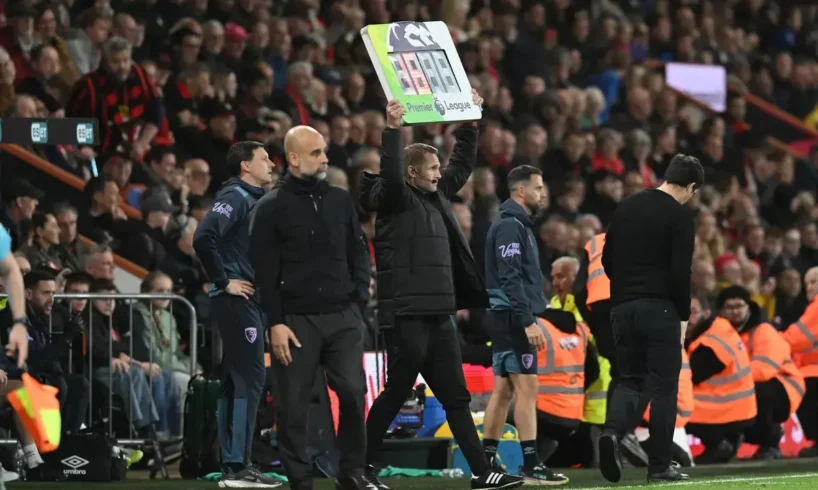
The introduction of five substitutions was initially presented as a necessary response to an increasingly demanding football calendar. Players were being asked to compete more frequently, recovery periods were shrinking and managers needed additional options to protect the fitness of their squads.
Those concerns were legitimate. However, making five substitutions a permanent feature has changed more than player workload. It has altered the competitive balance of matches and handed another considerable advantage to the wealthiest clubs.
Football’s appeal has always depended on the possibility that a weaker team can frustrate, outwork or surprise a stronger opponent. Five substitutions do not remove that possibility, but they make it significantly more difficult.
Bigger Squads Now Carry Even Greater Value
When teams were limited to three substitutions, managers had to make difficult choices. Replacing a tiring midfielder might mean losing the option to introduce another striker later. Making an early tactical change could leave the team vulnerable to an injury in the closing stages.
Five substitutions provide far more flexibility. That sounds positive, but the benefits are not shared equally.
A leading Premier League club can replace an international winger with another international winger. It can introduce fresh midfielders, a quick full-back and a proven goalscorer without dramatically weakening its team. A smaller club may have a competitive starting XI but cannot usually match that quality throughout its bench.
The rule therefore rewards squad depth as much as tactical intelligence. Wealthy clubs were already able to build stronger squads. Five substitutions allow them to use a greater proportion of that financial advantage in every match.
The Underdog’s Work Can Be Undone in Minutes
An underdog may execute its game plan perfectly for an hour. Its defenders remain compact, the midfield closes passing lanes and the forwards chase every loose ball. The stronger team becomes frustrated and the contest begins to feel increasingly uncomfortable.
The final half-hour used to provide a genuine test of the favourite’s patience…
..